Johanna Blakley
Media | Entertainment | FashionWhat can fashion teach the news industry?
Remember my TED.com talk, Lessons from Fashion’s Free Culture? Well, a Fellow at Harvard’s Nieman Center, Tomer Ovadia, interviewed me recently about what lessons the news industry might learn from the fashion industry. We discussed the many surprising parallels between the two and where the future might lead. Listen to the podcast now and let me know what you think!
Wanna Try Some VR? Here’s a Guide
Lately I’ve been doing a bit of VR bingeing. While I’m not a binge TV viewer, I cannot get enough VR when the opportunity presents itself. Luckily, I’m based in Los Angeles, where new media experiments are all the rage, and my job takes me to exactly the kinds of conferences that showcase new experiments in the field.
As you’ve no doubt heard, VR is all the rage right now, syphoning start-up funding from what many believe are more worthy, though less glitzy, projects. Stanford’s Jeremy Bailenson has just published Experience on Demand, which catalogs the many uses for VR, mostly for training or therapy, and VR pioneer Jaron Lanier has just come out with a surprisingly optimistic book, Dawn of the New Everything. Even if you’re skeptical about VR, I strongly urge you to try it out. And not just what you can pop into your Google Cardboard. Before you completely dismiss it, you need to experience it with better hardware, such as Samsung Gear or, even better, the HTC Vive.
Unfortunately, that’s easier said than done. Even if you get the chance to go to South By Southwest or the Future of Storytelling Festival (I went to both last year), you will soon learn that you’ll be facing long, depressing lines, sometimes hours long, for an experience that will last less than ten minutes — sometimes much less. Welcome to the dark side of experiential storytelling.
However, where there’s a will, there’s a way: ask questions, inquire ahead, and see if you can make reservations. IMAX VR now has 6 locations and counting: I loved Eagle Flight and Raw Data, two exhilarating multiplayer games. And museums and cultural centers offer these experiences, as well, often with a more civilized reservation system in place than conferences offer.
And then sometimes you just get lucky. While strolling through Montreal’s old city, I saw a sign saying “Luxury Rubbish:” anyone who knows me knows I wouldn’t pass that up. Turns out it was the gift shop for a cultural arts center that just happened to be hosting a massive VR exhibition curated by none other than the Future of Storytelling.
Needless to say, I showed up the moment the place opened, on a day the staff recommended as a low-traffic day, and spent half a day in other worlds of many people’s making. Afterwards I knew I must share a guide to these experiences so that unlucky others can figure out which line they should get into at the next SXSW, Sundance, Tribeca or Future of Storytelling Festival.
Instead of offering reviews of quality and preference, my goal here is to give some indication of what new realities these VR pieces explore: are you interested in how VR might transform books, art, dance, games or movies? Then read on, my friend.
Blind Vaysha, by Theodore Ushev, produced by the NFB
How might we transform literature into VR? In Blind Vaysha, the voice over narration keeps the story experience central but the innovation here is the way in which the vision theme plays out literally on your eyeballs. It’s a terrific convergence of form and content.
Broken Night, by Alon Benari, Tal Zubalsky and Alex Vlack, produced by Eko, Hidden Content and Real Motion, in collaboration with Irving Harvey.
How can we communicate the radical indeterminacy of memory? This is perhaps the only piece of VR I’ve seen that features bona fide Hollywood stars (Emily Mortimer and Alessandro Nivola) – and kudos to them for taking the plunge. The main value of this piece, I believe, is its success conveying the unreliability not only of the traumatized, but of the eyewitness. Which is you.
Dear Angelica, by Saschka Unseld, produced by Oculus Story Studio
There was something incredibly sumptuous about the colorful looping dreaminess of this gorgeous piece featuring the voice of Geena Davis. If you’re interested in graphic novels or comics, I think Dear Angelica is a delicious example of how drawings can come alive in three-dimensional space.
Flock, by David Lobser, produced by Object Normal, with support from NYU/MRL
Flock is a social VR experience, which means that you can interact with other people’s avatars within the VR space. Thankfully, we received some really good advice before starting: instead of focusing on racking up points by pecking bugs (were they bugs?) focus on climbing inside other players’ bird heads. (Yes, you read that correctly.) What ensues is completely psychedelic and, due to extreme physical proximity, puts into question claims about the alienating and anti-social effects of VR.
Life of Us, by Within (Chris Milk and Aaron Koblin), produced by Chris Milk, Megan Ellison (Annapurna Pictures) and Made with Unity
This was, undoubtedly, my favorite experience at Lucid Realities, which probably says more about me than the piece itself. As exhilarating as a roller-coaster ride, this trip through the evolution of the human species left me completely out of breath and dying to go back in. Like Flock, Life of Us is a social experience in which you can both see and hear a friend: I found it hard to stop talking during the experience because your voice evolves as your avatar evolves, from amoeba to space matter.
Fragments, by Asobo Studio and Microsoft Studios Global Publishing
How might Augmented Reality be used for gaming? This is the first time I’ve ever used HoloLens, augmented reality glasses that mapped game animations into my physical space. I love the idea, but it was clear from the outset that seven or eight minutes isn’t enough time to get a feel for the plot, the characters, or the rhythm of game play. Try, if you can, to get some serious time with Fragments so that you actually have time to piece them together.
Home: Immersive Spacewalk Experience, by Tom Burton, produced by BBC Studios and Rewind
What does it feel like to be in outer space? I had sweat rings after this experience, which tasked me with making a repair on the outside of a space station and finding my way back into the station afterwards. Needless to say, I panicked and died, which I heard was the fate of most. The seeming artificiality of the environment in outer space maps beautifully onto the artificiality of the VR experience, which is one reason I think Home had one of the longest wait lists at Lucid Realities.
The Island of the Colorblind, by Sanne De Wilde, produced by IDFA and Brakke Grond

I wouldn’t call this a virtual reality experience, but a fascinating experiential art installation that I’d recommend to anyone interested in the science of color or the possibilities of place-based, interactive storytelling. Like Blind Vaysha, one reason this works so well is because the story itself is about the nature of vision. Watch your eyes trick you.
RIOT (prototype), by Karen Palmer, in partnership with The National Theatre Immersive Storytelling Studio and Brunel University London
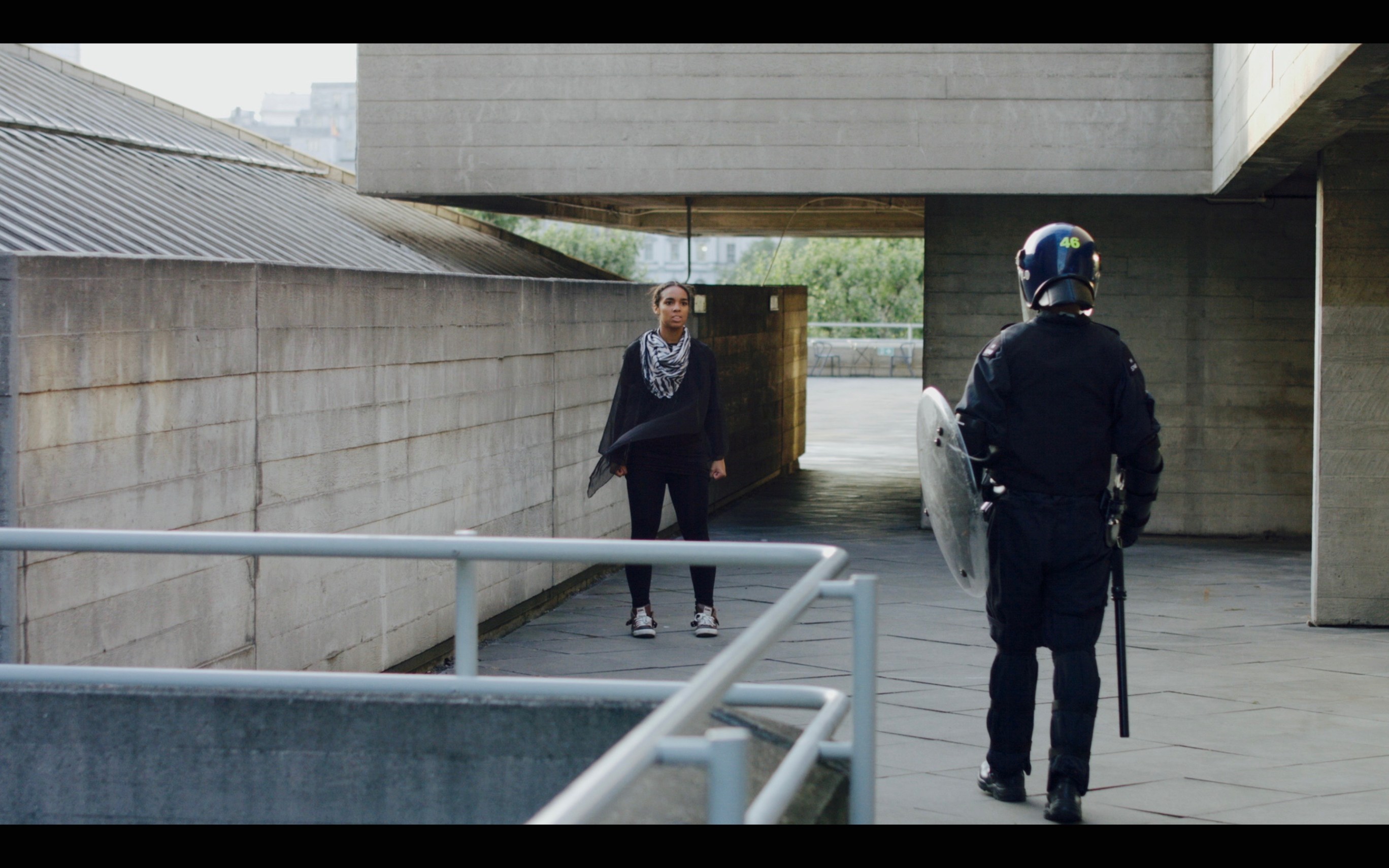
What happens when your facial expressions control the experience? I first heard about RIOT at SXSW but I had to wait several months before I had a chance to try it out in Montreal. Instead of choosing options from a menu, the application uses facial recognition technology to determine how you would react during a riot. I left this one wishing I could do it again with different expressions.
While this may seem too sci fi to be true, get used to it: immersive storytellers will inevitably adopt tools like these. Distracting hand controls will be a thing of the past.
Blindfold, made in partnership with the Committee to Protect Journalists and The Center for Human Rights in Iran.
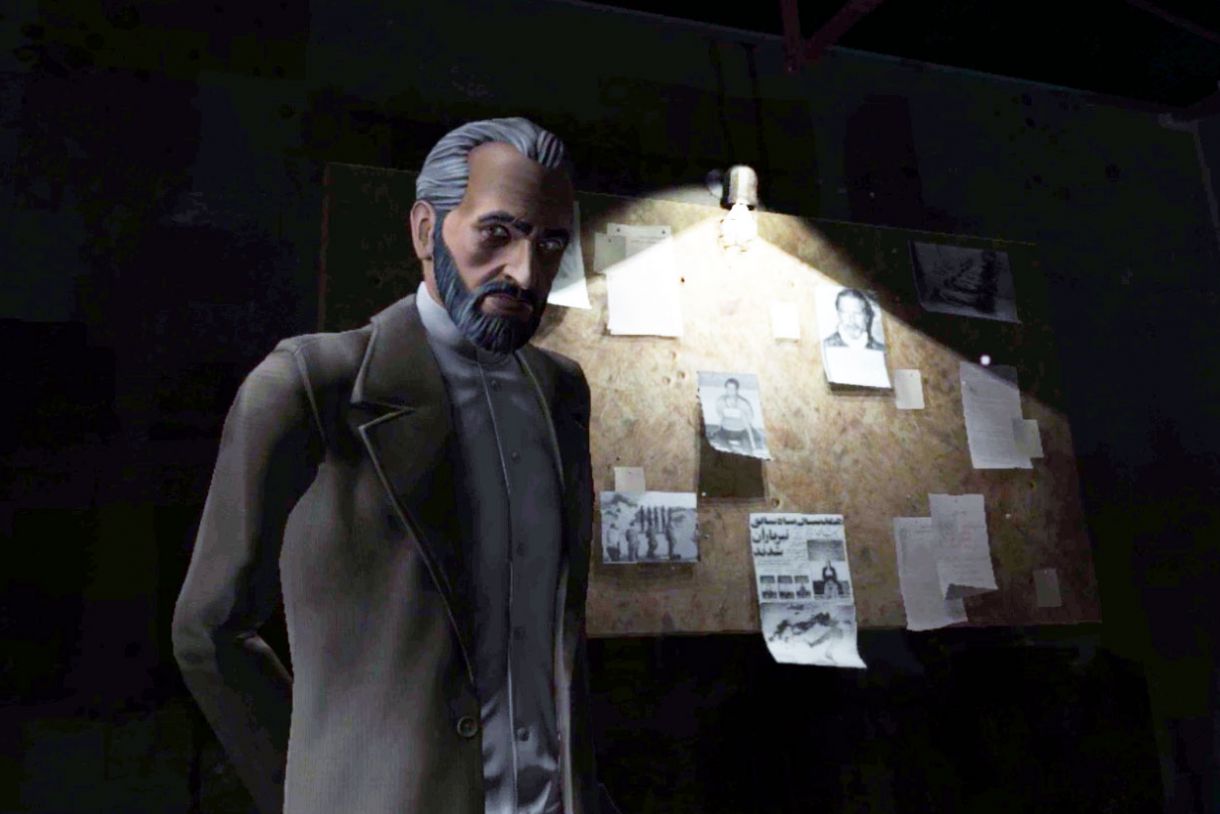
How would you respond to a violent interrogation? This sinister experience puts you in the shoes of an investigative journalist; your answers determine the fate of your brutally beaten friend who sits right in front of you. The experience is made more compelling by your ability to respond to the interrogator’s questions by nodding or shaking your head. Like RIOT, Blindfold allows us to imagine what it will be like to have a more embodied entertainment experience: in this one, the feeling of being seen by this ruthless interrogator is chilling.
Tilt Brush, by Google
How might we turn gestures into art? I used this truly delightful application in a friend’s house. If you get any pleasure out of pure color and giddily dancing around, then this is a must for you, too.
CARNE y ARENA (Virtually present, Physically invisible), by Alejandro G. Iñárritu, Emmanuel Lubezki, Mary Parent and ILMxLAB

By far the grandest VR experience I’ve ever had, Alejandro Inarittu’s large-scale Carne y Arena is a multi-room experience intended to give you the chance to walk in the shoes of immigrants crossing the Sonoran desert. A giant room filled with sand and a powerful wind machine help conjure the physical experience in a way that approaches participatory theater. After the VR experience ends, you enter a room filled with the true stories of the people you encountered, further blurring the line between virtual and real. No wonder it won a special Oscar.
Through You, by Saschka Unseld and Lily Baldwin
How might a dance performance be captured in VR? This live-action love story focuses on a pair of dancers, which reminded me repeatedly of Wim Wenders’ Pina, a poetic 3-D documentary film about the influential dancer/choreographer, Pina Bausch. Both experiences were simultaneously exhilarating and heartbreaking. Through You offers the additional advantage of giving us a peek at how VR can be used for pornography. Given the option, I’m not sure who would choose 2D over VR.
Transference™, by Ubisoft and SpectreVision
What would an interactive movie feel like? I heard a couple people yelp before I tried out this experience, which involves (spoiler alert) a very scary guy with a gun in the basement. Making your way through this grim scenario requires patience and problem-solving. Only a sample was available at Lucid Realities, but the entire experience includes multi-branching narratives in which players can affect the fates of characters.
Tree, by Milica Zec and Winslow Porter of New Reality Company, in partnership with Here be Dragons and Droga5
How might VR be used to increase empathy? When the goggles and the backpack came off, people were occasionally in tears. It’s hard to explain how emotionally moving this experience can be, since becoming a tree in a rainforest doesn’t exactly suggest epic drama, or even much movement, per se. But there is something magical about growing tall as the tree, and feeling your arms transform into limbs that you can shake and sway and use to shoo away exotic creatures. But the kicker for me (spoiler alert!) was the intoxicating aroma: it turns out that the backpack is loaded with timed scent diffusers, which tackled my primordial brain and took me there like nothing else could. If complete immersion is the endgame of entertainment, this VR experiment takes us closer to it.
Got some VR you’d like to recommend? Please send your favorites my way via enter@usc.edu.
The First Lady on Social Media

Washington Post reporter Krissah Thompson contacted me recently asking me if I had any thoughts about Melania Trump’s use of social media. I thought it was a fascinating question and so I started digging into her Instagram and Twitter accounts.
I must say, I found both feeds really dispiriting. I suspect that a lot of people who follow her closely and rate her highly might feel sorry for her. There is very little evidence that she is sharing anything remotely personal, which is what primarily attracts people to the social media feeds of celebrities and other powerful public figures. (The big exception, which might prove the rule, is her last Instagram post, a flirty close-up with a Santa hat.)
You might assume that Melania Trump is simply uninterested in the public stage or is uncomfortable sharing her private life with the public, but her personal Twitter feed, which she hasn’t updated since election day, is filled with personal preferences and observations that feel quite intimate. So much so, that I’m pretty sure I could pick out a gift for her (and flowers!) that I know she’d like. That is what’s so powerful about these social platforms: they can make you feel as if you really know someone. But the carefully coiffed woman featured in the FLOTUS feeds seems distant and disconnected. I couldn’t help but wonder whether her approval rating is higher than her husband’s precisely because she withholds so much, which gives her the patina of dignity.
Of course it’s tempting to compare Melania Trump’s social media presence with that of her predecessor, Michelle Obama. While the former first lady’s feed was also loaded with official events, she often spoke at those events, and through various media outlets, which allowed her to post material filled with her voice, her attitude, and her humor. She also had the habit of posting personal musings in the official FLOTUS account, which were differentiated from the rest of the feed with the initials “mo.” You don’t see any intimate asides from Melania Trump.
The vast majority of the photos she posts are documentation of formal events: she’s basically caught on camera performing her duty. What you don’t tend to see is her looking into the camera, or trying to connect with the American public, as Michelle Obama does quite convincingly in her photos and videos. Our current first lady seems to see herself as someone to be seen – which makes sense given her professional modeling career – but strikes me as a bit chilling in her new role, which is endowed with tremendous cultural and political power. The big question is, will she ever choose to wield it?
How Do We Detox Online News Comments?

Ramona Pringle, a colleague of mine at Ryerson University, invited me to join a wonderful panel for South by Southwest (SXSW) this year that tackled the daunting problem of toxic online news comments. As Ramona put it, how can we build systems that lead to constructive conversation rather than Lord of the Flies horror stories?
One of the best things about doing a panel like this is the conversations it spawns before and after the event. I was surprised that every time I mentioned this topic to people – including journalists, Austin ride-share drivers, academics, waiters, coders, you name it – they showed a lot more interest than I anticipated. A huge number of Americans comment on news (you’ll find some interesting stats below) and just about everyone I talked to had some thoughts about what needed to change in order to make online comments more civil. I share a laundry list of those ideas at the bottom of this post, but first, here’s a bit about our conversation at SXSW:
Ramona brought to the panel her colleague at Canada’s CBC News, Steve Ladurantaye, who was been working on the frontlines of news and UGC since he was the director of news and politics at Twitter Canada. This guy’s seen it all and he was dead serious when he said that the psychological effects of being a comment moderator can be compared to PTSD.
She also brought in Sean Stewart, a game designer and science fiction author, to discuss how we might approach online commenting as a design problem. In fact, the germ of the idea for the panel had come from a conversation they’d had about how surprisingly well-behaved people were in the online comment boards for The Beast, Sean’s break-out Alternate Reality Game (ARG), which engaged the public in an international, real-time online and offline murder mystery that promoted the release of the film A.I.: Artificial Intelligence. After the snarky film news site Ain’t It Cool News caught wind of the game, The Beast website received 25 million hits in one day.
Since Ain’t It Cool News is infamous for its commenter’s anti-social behavior, everyone – the game designers and the players – were shocked that interactions among players of the game were collaborative and constructive, as they helped one another gather real-world clues and solve the mystery together. Everyone wanted to know, “Why are we assholes when we’re on Ain’t It Cool News but we’re angels on The Beast?”
Sean’s theory was simple: people behave better when you give them something to do. He noticed that whenever the participants were given problems to solve they collaborated beautifully, but once they were less occupied they’d start reverting to the kind of aggressive, anti-social behavior that characterizes comments on so many news and information sites.
Giving participants rewards for certain types of behavior – particularly the type of rewards that translate into social proof – could be integrated into news comments sections, much as they have in gaming leader boards. This might mean giving news commenters points, badges, status, and rewards for engaging in desired actions. The key is, once again, social proof: other people need to be able to see these indicators of quality or engagement in order for them to have social currency.
Steve from CBC has experimented with different ways to positively engage audiences and found some success. One method that worked was sorting comments by most recent, rather than most popular (which are often the most polarizing). But some topics have proven too difficult to attract civilized comments. The CBC currently will not allow comments on stories about indigenous populations because public commentary is so toxic.
Another tactic that Steve has found to work quite well is having the journalist contribute to the conversation. His impression was that most aggressive commenters back-off quickly once they are reminded that the reporter they’re railing against is, in fact, a human being who is reading those cruel comments.
Let’s Look at Some Data
The Engaging News Project at UT Austin, which has done a lot of terrific research on online news comments, found support for this tactic in their research. However, I was surprised that their December 2015 national survey of news commenters and comment readers revealed some resistance to inviting journalists into the public commenting space. 61% of commenters said they welcome factual clarifications from journalists, but only 41% said that they’d like journalists to actively join the conversation and only 26% sought their guidance there.
This sentiment was echoed in other parts of this fascinating survey, which used a national representative sample. Among those who participate in one way or another in online news comments, either as readers of comments or writers of them, 42% said that they don’t want any policing of comments whatsoever, and another 31% weren’t sure either way. It seems that the Wild West insanity that we witness there now seems to be A-OK, or at least acceptable, to most of the inhabitants of this world.
You might be wondering, who are these people? The survey found that half of Americans either read or write comments on news sites, and most of this activity takes place on local news sites. Among the most striking findings for me was that commenters are more male and have lower levels of education and income compared to those who read news comments.
Here’s another kicker: 40% of people who read comments (but don’t write them) say that they read comments because of their entertainment value. This was the second most popular reason, after learning about other people’s opinions (46%), suggesting that the informational aspect of news comments may not be as important as we thought (or was that just me?). While we presumably consume the news to find out accurate things about the world, we don’t necessarily consume news comments for the same reason. However, in this age of “news as entertainment,” these findings might feed a growing fear that facts are not the only things, or maybe even the main things, that audiences are looking for in news media.
The Laundry List
Here’s a quick overview of some of the tools we might use to improve civility in online news comments:
Artificial Intelligence
Jigsaw, Google’s AI research arm, just released Perspective, a tool that identifies toxic language and can flag comments that are most likely loathsome. In conjunction with human moderation, this appears to be an incredible tool. Some fear, however, that it will be left to run on its own, which could trigger the removal of perfectly civil posts and the retention of some carefully cloaked hate speech.
Prompts
Using AI like Perspective, it could be possible to intercept posts before their posted, warning commenters, right after they hit “submit,” that the language they’re using is toxic. This would give posters an opportunity to reflect on their language and resubmit (or leave the site in a huff).
Metadata
What if each comment included some relevant metadata about the commenter? One big complaint about news comments is that it’s often evident that the poster didn’t actually read the article. What if the site posted the amount of the time the poster spent on the page, or the number of comments that person had posted that day? (Thanks to Cyrus for this one!)
Social proof
This is a specific subset of metadata: information such as the number of likes and followers someone has confers status and can help create an environment in which people have some guidelines for behavior.
Ranking
There are all kinds of comment ranking systems, but the one we talked about the most on the panel was Reddit’s. On that site, users can upvote or downvote posts and so universally panned posts sink out of visibility pretty quickly. Since attracting attention is a key motivator for certain flame-throwing commenters, invisibility is a painful price to pay. I was fascinated to discover that Reddit goes a bit further: it also programs its algorithm to give a lower ranking to controversial posts that get similar amounts of upvotes and downvotes. So a post with the same number of upvotes, but a lower number of downvotes, will be more visible to users, creating (presumably) more civil discourse.
Kicking the bums out
The main reason that people generate any kind of user generated content is because they hope to attract some attention to their thoughts, ideas, products, weird proclivities, what have you. By depriving people of attention (kicking them off the board after X number of infractions), a news site can create a rational disincentive to bad behavior
Constructive journalism
I’ve been doing research on solutions journalism – reporting that focuses on responses to social problems, not just the problems themselves – and so I really perked up when someone suggested that the kind of combative, gotcha journalism that we often encounter these days triggers the vitriolic exchanges we see in the comments section.
Formatting
The Engaging News Project performed a study where a one-column comment section (the typical format) was compared to a three-column format. The topic was the legalization of marijuana. In the three-column format comments were clustered by whether they were pro-legalization, anti-legalization, or if they had questions/other comments about the issue. There were some mixed results, but they found that people preferred the three-column format and they were more likely to leave comments there.
As you can probably tell, I’m just scratching the surface here. I can’t wait to hear the results from the University of Connecticut, which recently received a $2 million investment from the Templeton Foundation to fund ten scholars working to improve online civil discourse. Let’s hope they come up with some game-changing ideas for re-vamping our online public sphere, where there are far too many barriers to meaningful civic engagement.
Story Money Impact: Funding Media for Social Change
I’m proud to have been included in Tracey Friesen’s excellent book Story Money Impact, which provides practical advice to media makers and funders who hope to change the world with through documentary films, digital content and independent journalism.
Tracey interviewed me about my work on Food, Inc. for a chapter about achieving behavior change through documentary film. The book also offers insights from the people who brought you CITIZENFOUR, Virunga, The Corporation, and Age of Stupid. It includes advice about creating compelling content, setting goals for social impact, and finding financial support for media work.
Later this month, there will be a hands-on workshop on Cortes Island, in beautiful British Columbia, called Media That Matters: Story Money Impact, which builds upon the insights gathered in the book. Scholarships are still available so check it out quickly!
Post-Trump TV Storytelling
Because of research I’ve done on the relationship between entertainment and politics, I’m often asked how TV storytelling will change after Trump’s election. In our survey research at the Norman Lear Center, we have found over the years that the most popular shows on primetime broadcast TV appeal most to a group we call the “Purples,” 24% of the population that doesn’t fall neatly into Red or Blue ideological buckets. Here’s a quick overview of their unique constellation of political positions:
• Deep anxiety about the economy.
• Deep skepticism about the Iraq War isn’t working.
• Strong enthusiasm for protecting the environment
• Disgust with political leadership
• Deep suspicion of Corporate America and support for regulation
• Strong belief that women and men should share household duties equally
• Strong support for public schools
• Respect for immigrants, who are here “for work, not a handout”
• Mixed feelings about trade protectionism
• Optimism about new technology
• Belief that security is more important than liberties
• Strong belief that freedom is more valuable than equality
• Strong preference for diplomacy over use of force in battles against terrorism
• Strong sense of compassion for the less fortunate
• Ambivalence about the role of religion in public life
• Evenly split on regulation of gun ownership
• Strong support for cutting taxes
A glance at their ideological positions reveals how difficult it is to appeal to them in our current two-party political system. However, primetime TV storytellers appear to have cracked their code and captured their attention: compared to Reds and Blues, the Purples were, by far, the most inclined to enjoy mainstream TV offerings.
But after the surprising election of Trump, several prominent TV producers and creators have admitted publicly that they felt the need to re-evaluate their storytelling — in part, because they didn’t feel like they understood their audience anymore.
In a recent New York Times piece, writers from Madam Secretary, Veep, House of Cards, and Shonda Rhimes, creator of Scandal, How to Get Away With Murder and Grey’s Anatomy, discussed the many changes they made to their shows post-election. Ironically, they all felt the need to remove plot elements that too closely reflected the current reality, for fear that they would be accused of simply ripping stories from the headlines (remember that stories are written long before they’re shot and aired). The general response among writers on shows that highlight the hypocrisy and corruption of Washington — Veep, House of Cards, and Scandal — was that their melodramatic and ridiculous scenarios were apparently coming true, and they were going to be hard-pressed to concoct the unbelievable storylines that they thought they were churning out before. However, Rhimes, who believes that her core audience is composed of Obama supporters, is reluctant to simply ramp up the outlandish storylines typical of Scandal. While it was fun to tell “horror stories” about misbehavior in the Beltway while Obama was in office, she feels that her audience might not want those stories anymore:
Our show is basically a horror story. Really. We say the people in Washington are monsters and if anybody ever knew what was really going on under the covers they would freak out . . . But that was based on a world in which Obama was president and our audience was happy about what was going on in Washington and they felt optimistic. You can always tell any horror story you want to when the light is on. But now the lights are off, and now I think people don’t want to watch horror stories, they want you to light a candle somewhere.
Executives in Hollywood are straining to figure out how they can attract Trump voters to their fictional fare, without alienating the rest of the nation, but Rhimes — who is the current queen of primetime — has a slightly different take:
I get really offended at the concept that what came out of the election was that — how do I say this? — impoverished people who are not of color needed more attention. I thought that was kind of crazy, that they might need more television. They have television. It just felt very strange to me. And I thought really, the people who really need to be spoken to are the 50 percent of the population that did not vote at all. Those are the people who need to be more engaged
Our entertainment and politics surveys targeted registered voters, but among that population, the Purple group was the one most likely to admit to not voting. This might suggest that Rhimes is really on to something here. Could primetime fare be optimized for 160 million non-voters? And how might those stories be crafted in order to increase the liklihood of future political engagement . . . such as voting? Whoever cracks that code will not only take over Hollywood but will become the most powerful political force in this divided nation.
The Unintended Consequences of Technology
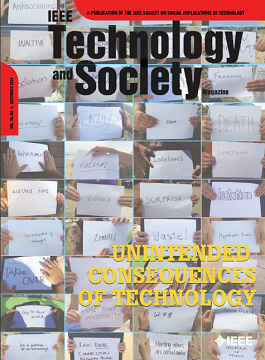
An article of mine on the “Technologies of Taste” has just come out in Technology & Society, a publication of the Institute of Electrical and Electronics Engineers (IEEE). It’s a fascinating special issue exploring the “Unintended Consequences of Technology.” As the guest editor, Ramona Pringle explained it to me that the focus wasn’t on “the dark side” of tech, but rather the complicated nature of our increasingly connected lives.
The call for papers, however, emphasized the danger of not carefully examining our relationship to new technology:
With all great innovation comes responsibility; and with the exponential growth of technology, the window within which we can examine the ethics and consequences of our adoption of new technologies becomes increasingly narrow. Instead of fear mongering, how do we adjust our course, as a society, before it is too late?
My piece explores the role that recommendation systems play in our online pursuits of knowledge and pleasure. How is our personal taste affected by finely-tuned commercial algorithms that are optimized to sell us products and monetize our attention? While Eli Pariser and others have argued that these systems place us in “filter bubbles” that insulate us from new ideas, I argue that companies like Google, Amazon and Netflix have strong commercial incentives to develop recommendation systems that broaden their customers’ horizons rather than limiting them, effectively bursting filter bubbles rather than reinforcing them.
This couldn’t be a more timely argument considering that concerns about filter bubbles have grown exponentially during the last presidential election cycle. What complicates the debate about filter bubbles is that each site — whether it’s primarily an ecommerce, social media, search or content platform — has very different goals in mind and different proprietary algorithms in place to achieve them. I hope this article triggers a more thoughtful conversation when people claim that ideological insularity is the obvious outcome of filtering and recommendation technology.
Los Angeles – The Actual & the Imaginary City
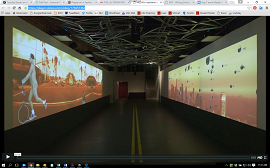
Los Angeles may be the most mediated city in the world: it is the backdrop of countless media representations. No wonder we have a hard time grasping it: which part is real and which part is fake? Is it a fool’s errand to try to separate the two?
We’ll discuss this and much more on Sunday, August 7 at 4pm at the WUHO Gallery in Hollywood, which is exhibiting an experimental moving image installation called Median. Created by Bill Ferehawk and David Hartwell, Median presents a Los Angeles of drive-by impressions. It distills the city into the canned personas that it projects to its passers-by and lends perspective on the everyday urban tics through which the city is read.
With Median as the backdrop, I’ll moderate a panel discussion with some keen observers of Los Angeles’s urban experience, including:
Bill Ferehawk and David Hartwell, creators of Median
Naomi Iwasaki, Program Director of the Los Angeles Mayor’s Office Great Streets Program
David Ulin, author of Sidewalking: Coming to Terms with Los Angeles
Andrew Wilcox, landscape architect and contributor to LAtitudes: An Angeleno’s Atlas
INFO:
Sunday, August 7, 2016
The Making of Median: 3pm (LA Forum members only)
From the Street: Median in Conversation: 4pm (free and open to the public)
LA Forum Events @ WUHO Gallery
6518 Hollywood Boulevard, Los Angeles, CA 90028
Median is on view through Thursday, August 25, 2016
Gallery Hours: Friday, Saturday, and Sunday, noon to 5 pm













 Johanna Blakley